
On-Page SEO vs Off-Page SEO
On-Page SEO vs Off-Page SEO: Key Differences and Why They Matter
Meta Description: Learn how On-Page SEO vs Off-Page SEO improve search visibility and how to build a balanced SEO strategy.
Search engine optimisation helps people find your website when they search online. Understanding On-Page SEO vs Off-Page SEO is essential because both improve visibility in different ways. On-page SEO focuses on elements you control on your website, while off-page SEO builds your website’s reputation across the internet.
What Is On-Page SEO?
On-page SEO includes changes made directly to your website to help search engines understand your pages and visitors use them easily. It combines useful content, clear structure, and a good user experience.
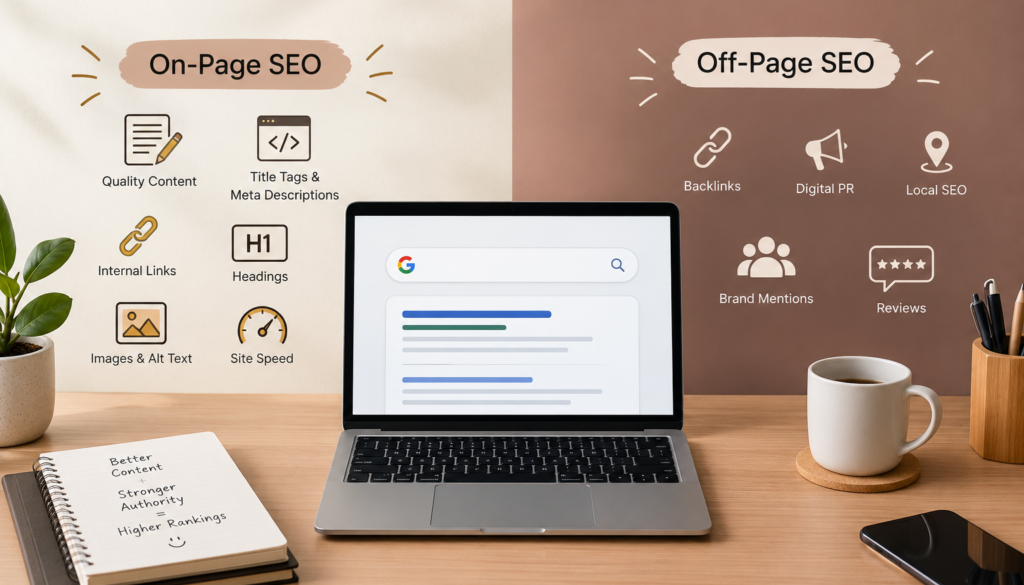
Important on-page SEO elements include:
- Keyword placement: Use relevant search terms naturally in titles, headings, introductions, and body content. Avoid keyword stuffing.
- Title tags and meta descriptions: Write clear titles and descriptions that explain what each page offers.
- Headings: Organise content with descriptive H1, H2, and H3 headings.
- Quality content: Answer readers’ questions accurately, provide useful details, and update information when needed.
- Internal links: Connect related pages to help visitors explore your website and search engines understand its structure.
- Images and speed: Add descriptive alt text, compress images, use mobile-friendly layouts, and improve loading speed.
For example, a bakery can optimise a birthday cake page with helpful descriptions, original photos, suitable alt text, and links to its delivery and contact pages.
What Is Off-Page SEO?
Off-page SEO covers activities outside your website that influence how trustworthy and relevant it appears. These signals help search engines understand whether others recognise your content as valuable.
Common off-page SEO activities include:
- Backlinks: Earn links from relevant, trustworthy websites, such as industry blogs or local organisations.
- Digital PR: Share useful news, research, or expert insights that publishers may reference.
- Local SEO: Keep business details accurate in relevant directories and maintain an updated Google Business Profile.
- Brand mentions: Build recognition so people discuss and search for your business.
- Reviews: Encourage genuine customer feedback and respond professionally.
For example, the bakery could receive a mention in a local food blog, collect customer reviews, and support a community event. These activities strengthen its online reputation.
On-Page SEO vs Off-Page SEO: What Is the Difference?
The main difference is where the work happens. On-page SEO improves your website’s content, structure, and technical experience. Off-page SEO builds authority and trust through signals from other websites and online communities.
You have more direct control over on-page changes. Off-page results depend partly on how others respond to your brand. Neither approach replaces the other. Excellent content may struggle to compete if nobody discovers it. Likewise, a site with many backlinks may fail to satisfy visitors if its pages are confusing or unhelpful.
On-Page SEO vs Off-Page SEO: Which Should You Focus On?
Start with your website. Make important pages useful, mobile-friendly, technically accessible, and easy to navigate. Improve titles, headings, loading speed, and internal links.
Then build authority. Publish content worth referencing, develop genuine industry relationships, maintain accurate local listings, and ask satisfied customers for honest reviews. Avoid buying backlinks or using spammy link schemes. These shortcuts can harm search visibility.
Track progress with Google Search Console and Google Analytics. Review impressions, clicks, search queries, website visits, and enquiries. Use the data to improve pages and plan your next steps.
Summary
Understanding On-Page SEO vs Off-Page SEO helps you build a balanced search strategy. On-page SEO makes your website clear, useful, and easy to navigate. Off-page SEO builds credibility beyond your website. For sustainable results, work on both consistently, focus on people rather than tricks, and measure what brings relevant visitors and enquiries.
If your business needs a stronger online presence, explore the services of a digital marketing strategist in Kannur and build an SEO plan around your goals.